

Breast milk protein: The role of Lactopontin in infant health
Written by Maria Fernanda Cedillo,
Category: Endocrinology & Diabetes
Lactopontin is a vital breast milk protein that supports infant immunity, gut health, and development.

Breast milk is more than just nutrition, it’s a complex and dynamic source of essential bioactive compounds that support infant health. Among its many components, breast milk protein plays a crucial role in immune function, gut health, and overall development.
One of the most intriguing bioactive proteins in breast milk is lactopontin (also known as milk osteopontin). Recent studies highlight its importance in early immune protection, gut integrity, and even inflammation control.
What is lactopontin, and why is it a key breast milk protein?
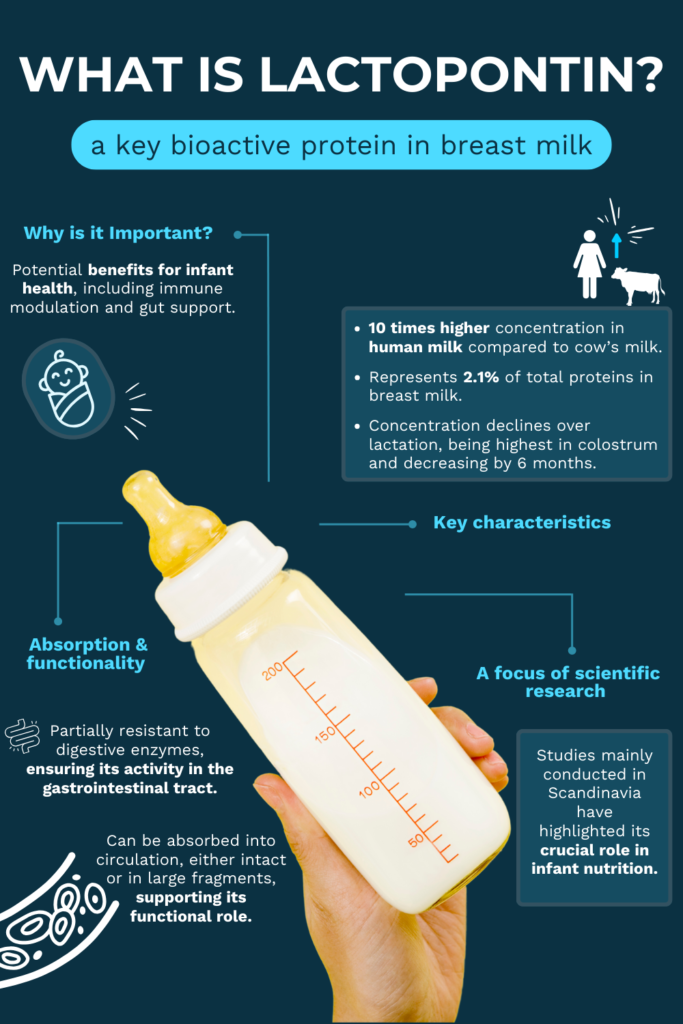
Lactopontin is a highly phosphorylated glycoprotein found in high concentrations in colostrum, the first form of breast milk produced postpartum. Compared to cow’s milk, human breast milk contains 10 times more lactopontin, suggesting its vital role in early development.
Unlike other breast milk proteins, lactopontin remains partially resistant to digestion, allowing it to actively interact with the gastrointestinal tract and immune system.
How does lactopontin support infant health?
Lactopontin influences multiple aspects of an infant’s health, including:
1. Strengthening the immune system
Lactopontin helps regulate the immune system by:
- Acting as an opsonin, marking harmful bacteria for elimination by macrophages.
- Stimulating the production of interleukin-12 (IL-12), which enhances the body’s ability to fight infections.
- Reducing inflammation, lowering the risk of immune-related disorders in infancy.
Studies show that breastfed infants with higher levels of lactopontin experience fewer hospital admissions for infections compared to those fed standard infant formula.
2. Supporting gut health and digestion
Lactopontin contributes to intestinal integrity by:
- Promoting tight junction proteins like Claudin-3, which help maintain a strong gut barrier.
- Reducing intestinal permeability (often referred to as leaky gut), protecting against infections and inflammatory conditions.
- Encouraging the growth of beneficial gut microbiota, crucial for digestion and overall health.
Animal studies show that lactopontin can help repair intestinal inflammation, suggesting a potential role in preventing conditions like necrotizing enterocolitis (NEC) in preterm infants.
3. Anti-inflammatory and antibacterial properties
Lactopontin has been linked to reduced skin inflammation in conditions like atopic dermatitis. Studies show that it works even better when combined with 2’-fucosyllactose (2’-FL), a human milk oligosaccharide (HMO).
Additionally, lactopontin has demonstrated bacteriostatic effects against harmful bacteria like Staphylococcus epidermidis, which can cause infections in newborns.
Lactopontin in infant formula: Can it replace breast milk protein?
Given its clear benefits, lactopontin has been approved by the European Food Safety Authority (EFSA) for inclusion in infant formula. Clinical trials suggest that formula enriched with lactopontin may help:
- Reduce inflammatory markers like TNF-α and IL-10.
- Lower the incidence of fever and infections in formula-fed infants.
- Improve immune response, bringing formula-fed babies closer to the immune protection of breastfed infants.
However, while adding lactopontin to formula is a promising step, breast milk remains the gold standard for infant nutrition due to its complex mix of bioactive compounds that work together to optimize health.
Why breast milk protein matters for infant health
Lactopontin stands out as a critical breast milk protein with wide-ranging effects on immune function, gut health, and inflammation control. Its naturally high presence in human milk, particularly in colostrum, highlights its essential role in early infancy.
As research progresses, the inclusion of lactopontin in infant formula could help bridge the gap between formula-fed and breastfed infants, ensuring better health outcomes for all babies.
Want to learn more? Our free and UEMS accredited course “Milk proteins and their effects on infant health” dives deeper into the science behind breast milk proteins and their impact on infant health. Subscribe to Xpeer now and get free access to this course.