

Challenges in medical education for the pharma industry
Written by Daniela Clape,
Category: Digital Health & Omnichannel
Discover the top 5 challenges in medical education for the pharma industry and strategies to enhance HCP engagement

Medical education in the pharma industry faces unique challenges in keeping healthcare professionals (HCPs) well-informed about the latest medical advances, treatment guidelines, and innovative therapies. The shift from traditional to digital learning platforms has introduced new complexities for medical education in the pharma industry, especially when developing continuing medical education programs.
This article explores the top 5 challenges pharma companies encounter in educating HCPs and offers effective strategies to overcome them.
1. Reaching a distracted audience
In today’s digital landscape, HCPs are increasingly distracted by heavy schedules, virtual engagement, and a constant stream of information. Capturing their attention for continuing medical education programs can be difficult, yet live events provide immersive experiences that engage participants and reduce distractions.
According to research from the Kerala Journal of Ophthalmology, live continuing medical education programs create focused learning environments through faculty interactions, hands-on activities, and peer engagement. In contrast, virtual CME platforms offer flexibility, with hybrid models providing a blend of live interaction and on-demand learning, making CME accessible and convenient.
Moreover, the Sixteenth Annual European CME Forum recommended using “bite-sized” microlearning in medical education to cater to busy professionals. Digital tools such as social media are also valuable CME channels, offering engaging, digestible content like interactive threads, video polls, and quizzes.
This format meets HCPs in their preferred learning environments, enhancing engagement and accessibility. Balancing live and digital methods can foster a more accessible and engaging experience, meeting HCPs’ needs in real time and on demand.
2. High cost of developing and distributing content
Developing high-quality content for medical education in the pharma industry requires significant investment, particularly to meet regulatory and compliance standards.
To address these challenges, many pharmaceutical companies are turning to digital solutions to reduce costs and improve the reach of continuing medical education programs. For instance, Germany’s adoption of virtual CME courses has lowered logistical expenses while increasing rural HCP access.
The European Accreditation Council for Continuing Medical Education (EACCME) provides a standardized framework for accrediting CME activities across Europe. This model simplifies the accreditation process, offering consistent quality standards while encouraging interprofessional education.
Through EACCME accreditation, pharmaceutical companies can more easily develop continuing medical education programs that meet unified European standards, facilitating cross-border educational initiatives that are both cost-effective and accessible.
As digital education becomes more integral, EACCME’s joint accreditation system and online CME platforms will play a critical role in expanding access to high-quality medical education, supporting cost efficiency, and promoting continuous learning across the healthcare sector.
3. Engaging learners through interactivity
Effective medical education in the pharma industry relies on interactive elements that help HCPs retain knowledge and apply it in clinical settings.
The European CME Forum highlights formats like case discussions, simulations, and real-time quizzes as effective for practical learning. These interactive components allow HCPs to test their knowledge in real-world scenarios, reinforcing information retention and leading to better patient care outcomes.
Clear learning objectives and measurable outcomes are essential to keeping HCPs motivated. Programs that incorporate post-activity evaluations and learner feedback create a continuous improvement cycle, allowing CME providers to refine content and make it more impactful.
Catering diverse learning styles, through visual content for some and text-based modules for others, also helps continuing medical education programs engage HCPs in ways that maximize their educational experience.
4. Overcoming scheduling constraints
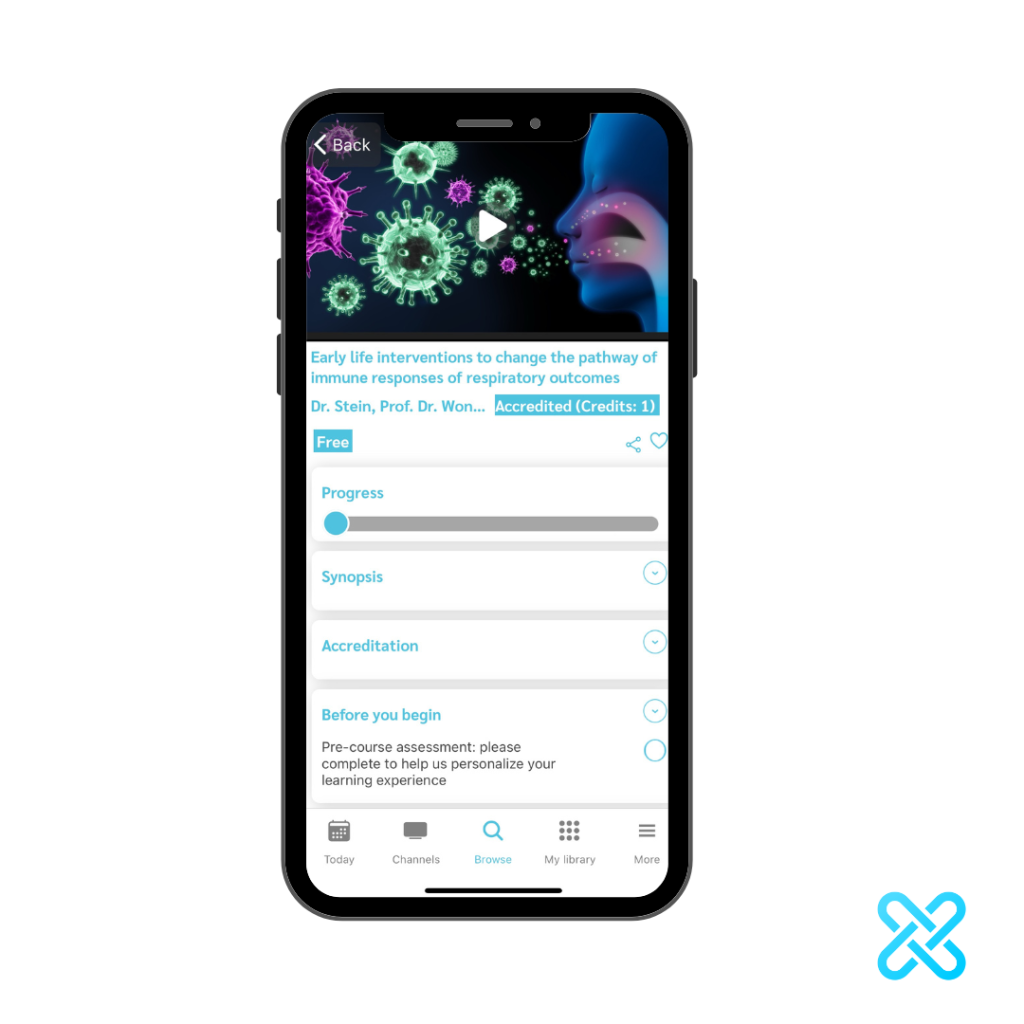
HCPs often struggle to balance demanding schedules with the need for continuing education. Custom eLearning solutions offer flexible options, allowing HCPs to learn on their own time through modules available anytime, anywhere.
Microlearning in healthcare provides short, focused sessions, which are ideal for quick breaks and reduce the scheduling burden on HCPs, while social media-based CME offers on-the-go learning that suits the mobile preferences of busy professionals.
Hybrid models are another effective solution, as they combine live, interactive sessions with accessible recorded modules. This approach accommodates a wide range of schedules, enabling HCPs to participate in real-time while revisiting content later which ensures HCPs can fully engage in continuous education.
5. Ensuring CME relevance through needs analysis
Creating effective continuing medical education programs requires thorough needs analysis to ensure content aligns with HCPs’ educational requirements. Identifying knowledge gaps is key to developing impactful programs, as noted by the ACCME and European CME Forum.
By using practice gap assessments, targeted courses could be designed to bridge gaps between current practices and best practices.
Setting clear objectives for each continuing medical education program helps in addressing the specific challenges HCPs face in their practice. Incorporating feedback and real-world data in program development allows for continual adaptation and improvement, making CME offerings both relevant and practical.
In this way, these programs not only inform but empower HCPs to enhance their clinical skills, elevate patient care, and improve overall healthcare outcomes.
Conclusion
Medical education for HCPs is essential but often complicated by the challenges of engagement, cost, scheduling, and maintaining relevance. By adopting digital solutions, needs-based program development, and interactive, flexible learning formats, pharma companies can effectively overcome these obstacles.
These efforts not only enhance HCP engagement and knowledge retention but also support the broader goal of improving healthcare outcomes.
In this evolving educational landscape, pharma companies that adapt to HCP needs and leverage digital tools will position themselves as leaders in HCP education.
By addressing the unique challenges of CME, they can create meaningful learning experiences that empower HCPs, contribute to their professional growth, and ultimately benefit patient care.