

Inaxaplin (VX-147): A First-in-Class Therapy Targeting APOL1-Mediated Kidney Disease
Written by Zayra Otero,
Category: Digital Health & Omnichannel
Chronic kidney disease (CKD) remains a significant global health challenge, particularly among individuals with African ancestry. A notable contributor to this disparity is the presence of high-risk variants in the APOL1 gene, which are associated with an increased risk of kidney diseases such as focal segmental glomerulosclerosis (FSGS) and HIV-associated nephropathy. Addressing this unmet medical need, Inaxaplin (VX-147), developed by Vertex Pharmaceuticals, emerges as a promising first-in-class oral therapy specifically targeting APOL1-mediated kidney disease (AMKD).

Understanding APOL1-Mediated Kidney Disease (AMKD)
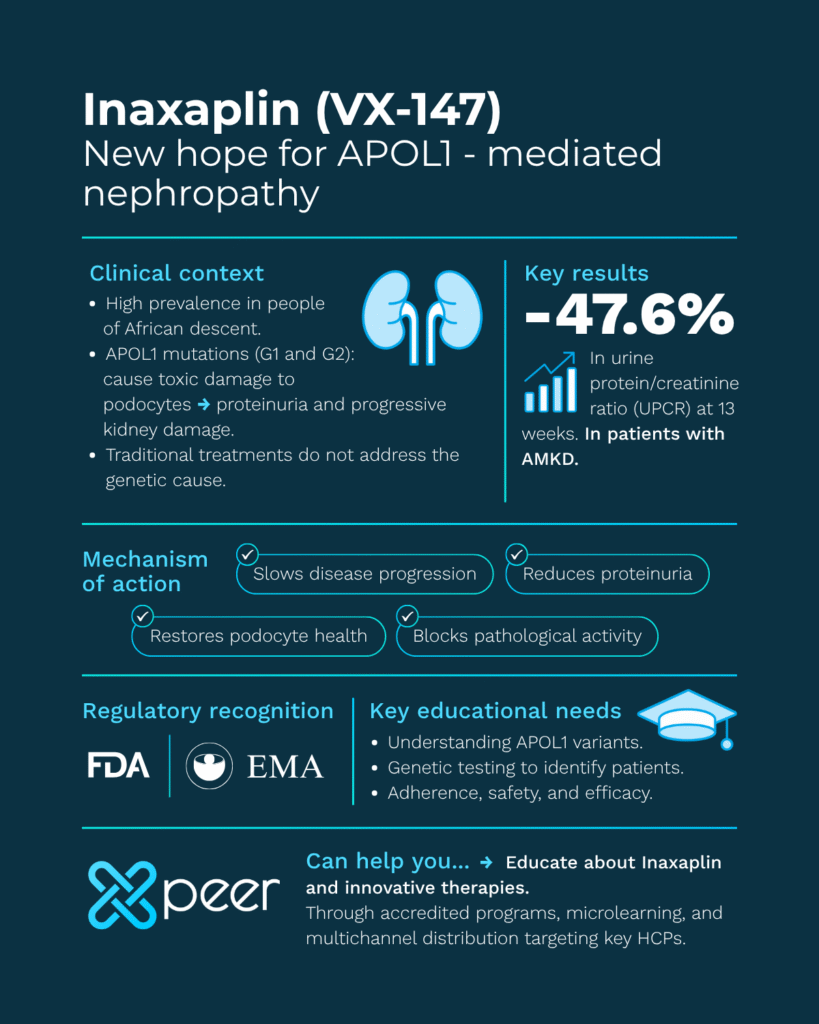
APOL1-mediated kidney disease is a genetic condition predominantly affecting individuals of African descent. The presence of two risk variants (G1 or G2) in the APOL1 gene leads to a toxic gain-of-function in podocytes, the specialized cells in the kidney’s filtering units. This dysfunction results in proteinuria and progressive kidney damage. Traditional treatments have been largely nonspecific, focusing on managing symptoms rather than addressing the underlying genetic cause.
Inaxaplin: Mechanism of Action and Clinical Development
Inaxaplin is a small-molecule inhibitor designed to block the pathological activity of APOL1 protein variants. By inhibiting APOL1 channel function, Inaxaplin aims to restore podocyte health, reduce proteinuria, and slow disease progression.
In a Phase 2a proof-of-concept study, Inaxaplin demonstrated a 47.6% reduction in urine protein-to-creatinine ratio (UPCR) over 13 weeks in patients with AMKD, indicating significant potential in mitigating kidney damage.
Ongoing Clinical Trials and Regulatory Milestones
Vertex has progressed Inaxaplin into the Phase 3 portion of its global Phase 2/3 AMPLITUDE trial. This study evaluates the efficacy and safety of a 45 mg once-daily oral dose of Inaxaplin compared to placebo, alongside standard care. Notably, the trial has expanded to include adolescents aged 10 to 17 years, reflecting the therapy’s potential across age groups.
Regulatory agencies have recognized Inaxaplin’s promise:
- The U.S. Food and Drug Administration (FDA) granted Breakthrough Therapy Designation and Rare Pediatric Disease Designation for Inaxaplin in treating APOL1-mediated FSGS.
- The European Medicines Agency (EMA) awarded Priority Medicines (PRIME) and Orphan Drug designations, underscoring the therapy’s potential to address significant unmet medical needs.
Competitive Landscape: Other Therapies in Development
While Inaxaplin leads as a targeted therapy for AMKD, other treatments are under investigation:
- Bardoxolone methyl: An antioxidant inflammation modulator studied for CKD, though concerns about cardiovascular safety have arisen.
- Sparsentan: A dual endothelin angiotensin receptor antagonist evaluated for FSGS and IgA nephropathy, showing promise in reducing proteinuria.
However, Inaxaplin’s unique mechanism directly targeting the APOL1 pathway distinguishes it in the therapeutic landscape.
Implications for Medical Education and Healthcare Practice
The introduction of Inaxaplin necessitates comprehensive education for healthcare professionals:
- Genetic Literacy: Understanding the role of APOL1 variants in CKD progression.
- Diagnostic Strategies: Implementing genetic testing to identify eligible patients.
- Therapeutic Monitoring: Managing treatment adherence and monitoring efficacy and safety.
Educational initiatives should focus on nephrologists, primary care physicians, and genetic counselors to ensure optimal patient outcomes.
Conclusion
Inaxaplin represents a significant advancement in precision medicine for kidney disease, offering hope to populations disproportionately affected by APOL1-mediated conditions. Its targeted approach addresses the root cause of disease, potentially transforming the management of AMKD.
Collaborate with Xpeer for Educational Initiatives
At Xpeer, we specialize in developing tailored educational programs for healthcare professionals. Our expertise includes creating content that bridges the gap between cutting-edge research and clinical practice.
Interested in developing educational content around Inaxaplin or other innovative therapies?
Contact us to explore collaboration opportunities.
References
- Gbadegesin, R., & Lane, B. (2023). Inaxaplin for the treatment of APOL1-associated kidney disease. Nature Reviews Nephrology, 19, 479–480.nature.com+1en.wikipedia.org+1
- Vertex Pharmaceuticals. (2024). Vertex Advances Inaxaplin (VX-147) into Phase 3 Portion of Adaptive Phase 2/3 Clinical Trial for the Treatment of APOL1-Mediated Kidney Disease. Retrieved from Vertex Press Releasesynapse.patsnap.com+11investors.vrtx.com+11biospace.com+11
- Egbuna, O., et al. (2023). Inaxaplin for Proteinuric Kidney Disease in Persons with Two APOL1 Variants. New England Journal of Medicine, 388(11), 987–998.clinicaltrials.eu+10en.wikipedia.org+10nejm.org+10
- NephJC. (2023). Inaxaplin and proteinuric kidney disease treatment: Taking the APOL1 breakthrough forward. Retrieved from NephJCnephjc.com
- Kidney International. (2023). APOL1 channel blocker reduces proteinuria in FSGS. Kidney International, 103(3), 456–457.en.wikipedia.org+2kidney-international.org+2pubs.glomcon.org+2
Note: This article is intended for informational purposes and should not replace professional medical advice. Healthcare professionals should consult relevant guidelines and clinical trial data before making treatment decisions.