

Alzheimer’s Disease: Symptoms, Diagnosis and Management
Written by Maria Fernanda Cedillo,
Category: Endocrinology & Diabetes
Alzheimer’s disease is the leading cause of dementia worldwide. It affects millions of patients and their families, posing significant clinical and social challenges. In this

Alzheimer’s disease is the leading cause of dementia worldwide. It affects millions of patients and their families, posing significant clinical and social challenges.
In this article, we will explore the key symptoms of Alzheimer’s, its diagnostic process and evidence-based management strategies. Our goal is to provide healthcare professionals with a clear and practical update on this evolving field.
What is Alzheimer’s disease?
Alzheimer’s disease is a progressive neurodegenerative disorder. It leads to cognitive decline, functional impairment and behavioral changes. According to the Alzheimer’s Association, it accounts for 60-80% of all dementia cases.
Early recognition and an integrated approach to care are essential to improve patient outcomes. As the global burden of dementia increases, staying informed becomes a clinical priority.
Recognizing the early symptoms of Alzheimer’s disease
Identifying early signs of Alzheimer’s disease allows for timely intervention and patient support. Common initial symptoms include:
- Short-term memory loss.
- Language difficulties.
- Impaired visuospatial abilities.
- Changes in mood or personality.
As the disease progresses, patients experience increasing functional decline and dependency.
The 5 A’s of Alzheimer’s disease
A useful tool for understanding the clinical presentation of Alzheimer’s is the 5 A’s framework. Here is a visual guide to the core cognitive deficits observed in this disease:
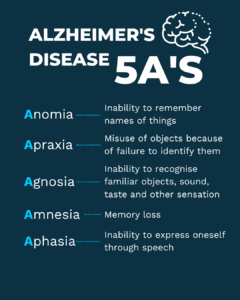
Being familiar with these signs helps clinicians structure their diagnostic assessment.
Diagnosis and differential diagnosis
Diagnosing Alzheimer’s disease is primarily clinical. It involves a detailed history, cognitive testing and appropriate use of imaging techniques (MRI, CT).
Differential diagnosis is crucial. Clinicians must consider:
- Vascular dementia
- Lewy body dementia
- Frontotemporal dementia
- Other reversible causes of cognitive impairment
If you would like to deepen your understanding of dementia management and differential diagnosis, Xpeer offers the accredited course Approach to Dementia, designed for busy healthcare professionals.
Management strategies
Managing Alzheimer’s disease requires a comprehensive and patient-centered approach. Key components include:
- Pharmacological treatments – Cholinesterase inhibitors and memantine can help slow cognitive decline.
- Non-pharmacological interventions – Cognitive stimulation, physical activity and psychosocial support improve quality of life.
- Behavioral symptom management – Addressing agitation, depression and sleep disturbances is often necessary.
A multidisciplinary team approach enhances outcomes and supports both patients and caregivers.
Staying updated in clinical practice
The field of dementia care is evolving rapidly. To provide optimal care, healthcare professionals must keep their knowledge current.
At Xpeer, you can access updated, UEMS accredited courses on dementia and neurodegenerative diseases, available anytime, on any device. Stay informed and enhance your clinical practice.