

AI and Machine Learning in Pharma: Redefining Medical Education
Written by Daniela Clape,
Category: Digital Health & Omnichannel
The ability to harness AI and ML allows companies to create measurable impacts on healthcare outcomes

Artificial intelligence (AI) and machine learning (ML) are driving a paradigm shift across industries, and the pharmaceutical sector is no exception. Within this field, AI and machine learning in pharma are transforming medical education, enabling pharmaceutical companies to deliver more effective, personalized, and engaging educational experiences to healthcare professionals (HCPs).
The ability to harness AI and ML allows companies to optimize content delivery, enhance physician engagement, and create measurable impacts on healthcare outcomes.
Let’s explore how AI and ML are reshaping medical education in the pharmaceutical industry and why adopting these technologies is crucial for success.
AI in Content Operations: Revolutionizing the Delivery of Knowledge
The use of AI and machine learning in pharma content has proven to be a game-changer. Traditionally, producing and distributing medical education materials on a scale involved significant resources, time, and manual effort.
However, AI-powered platforms have revolutionized this process by enabling automation and improving efficiency across content operations such as production, management, localization, and delivery.
For example, platforms like eWizard integrate pharmaceutical machine-learning services to streamline content workflows. These tools allow for instant text translation, audio-to-text conversion, and efficient content search within vast databases, as highlighted in a report by Viseven.
The integration of AI is part of a larger digital transformation in the pharmaceutical industry, enabling pharma companies to deliver high-quality medical education at scale.
Additionally, AI enables the delivery of personalized educational materials to the right audience at the right time, ensuring maximum relevance and engagement.
The research Machine Learning and Artificial Intelligence in Pharmaceutical Research and Development: A Review highlights how AI in medical education improves accessibility and engagement. AI-driven tools provide real-time adaptation of content, allowing HCPs to interact with materials tailored to their specific needs, leading to better retention and practical application.
AI and ML in Pharma Marketing for Medical Education
AI in pharma marketing is not just improving content operations, it’s also transforming how pharmaceutical companies approach marketing for medical education.
AI-driven insights enable companies to analyze previous campaigns and identify strategies that have resonated most effectively with their target audience. This data informs future campaigns, ensuring they deliver maximum impact.
One of the standout benefits of AI in pharma marketing is its ability to predict campaign outcomes. Machine learning algorithms analyze engagement data, such as video watch times and click-through rates, to forecast the success of educational materials.
According to the study Artificial Intelligence-Driven Pharmaceutical Industry: A Paradigm Shift in Drug Discovery, Formulation Development, Manufacturing, Quality Control, and Post-Market Surveillance, personalized content delivery powered by AI significantly improves physician engagement.
For instance, AI can identify the types of educational materials most likely to capture a physician’s attention, whether through interactive videos, case studies, or peer-reviewed research summaries.
This predictive capability ensures that medical education efforts are not only efficient but also effective, achieving measurable outcomes such as increased knowledge retention and adoption of new treatments.
Benefits of AI for Medical Education in Pharma
AI’s role in medical education extends beyond efficiency, it enhances the quality, accessibility, and scalability of educational initiatives. Some of the most notable benefits include:
1. Enhanced Accessibility
AI bridges gaps in medical education by making high-quality materials accessible to HCPs worldwide, regardless of geographical or technological constraints. Platforms like Xpeer exemplify this by enabling HCPs to access cutting-edge content anytime and anywhere.
2. Improved Engagement Through Personalization
This research demonstrates that AI-driven personalization improves learning outcomes by tailoring content to individual preferences. This targeted approach leads to higher engagement and knowledge retention.
3. Real-Time Adaptation
AI-powered systems can adapt educational content in real-time based on user interactions. For example, if a physician struggles with a particular topic, the system can provide supplementary materials or recommend follow-up modules to enhance understanding.
4. Scalable Solutions
Scaling medical education has traditionally been a challenge due to resource constraints. However, AI in pharma education allows companies to deliver personalized experiences to millions of HCPs simultaneously without compromising quality.
5. Data-Driven Insights
AI’s ability to analyze and interpret user behavior generates actionable insights. The study Artificial Intelligence in Medical Training: Building a Smarter Future highlights how predictive analytics enable pharma companies to refine their content strategies, ensuring ongoing relevance and effectiveness.
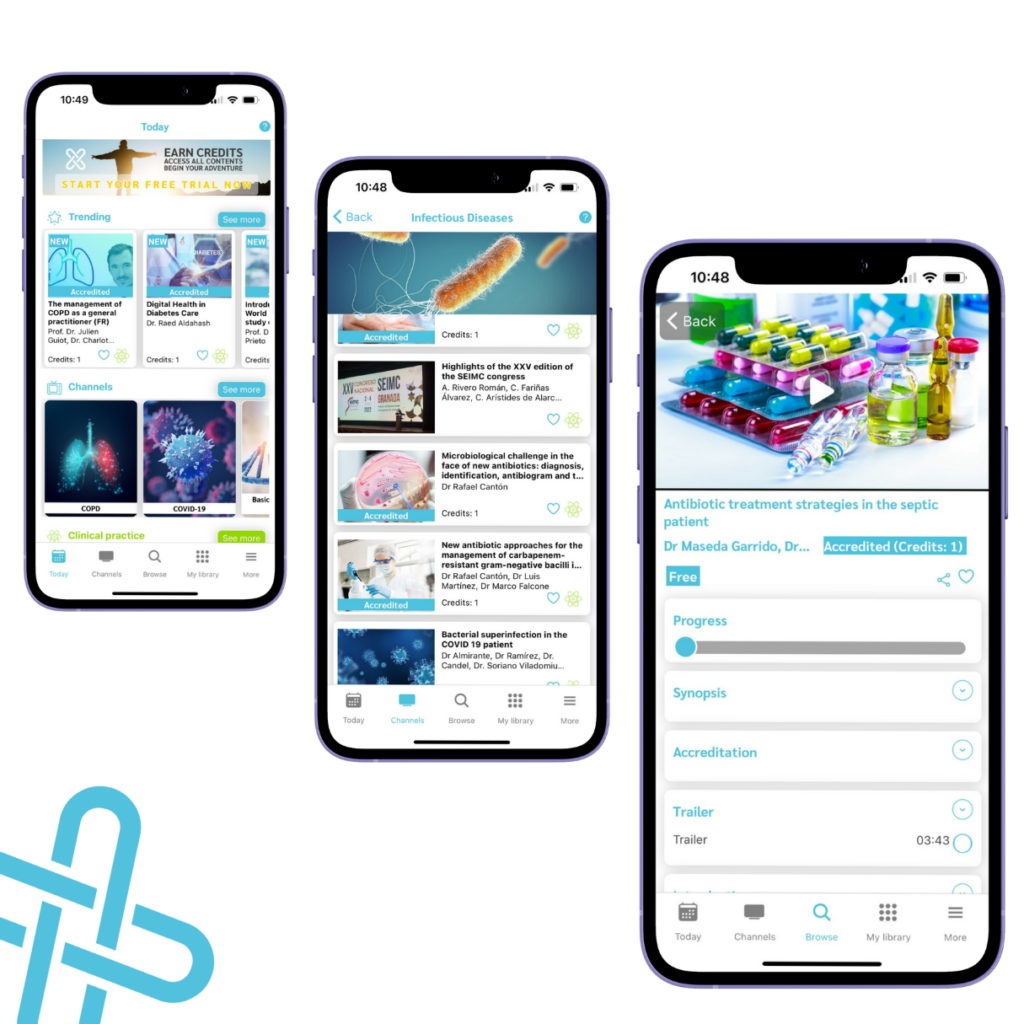
AI-powered algorithms recommend the most relevant content to HCPs for a tailored learning experience on Xpeer.
AI’s Role in Behavioral Change
AI and ML have a profound impact on driving behavioral change among HCPs, a core goal of medical education. By delivering personalized content aligned with the physician’s specific needs, AI encourages the adoption of new treatments and protocols.
Physicians who interacted with AI-curated educational materials demonstrated higher rates of treatment adoption and retention compared to those exposed to generic content. This underscores the value of AI in fostering meaningful engagement and creating lasting changes in medical practice.
Adopting AI-driven strategies can also address many of the challenges in medical education for the pharma industry, such as increasing engagement and fostering deeper connections with HCPs.
AI in Decision Support for HCPs
AI is also enhancing decision-making capabilities within medical education. Decision support systems powered by AI provide evidence-based recommendations during educational sessions, bridging the gap between theoretical knowledge and practical application.
The previous highlights how these systems empower HCPs to make informed clinical decisions, thereby improving patient outcomes.
The Future of AI in Pharma and Medical Education
The pharmaceutical industry is rapidly evolving, and the adoption of AI and machine learning in pharma is set to accelerate in the coming years. Reports indicate that by 2025, over 50% of global healthcare companies plan to integrate AI into their operations.
For medical education, this means more engaging, effective, and measurable strategies to disseminate critical information to HCPs. AI-powered platforms like Xpeer are at the forefront of this transformation, enabling companies to deliver world-class educational experiences that drive real-world impact.
For decision-makers in global medical affairs and marketing, the time to act is now. You have the opportunity to leverage AI and machine learning in pharma to redefine medical education. By embracing AI, you can ensure that your educational initiatives are not only impactful but also aligned with the evolving needs of HCPs and the broader healthcare landscape.